Showing posts with label books. Show all posts

Tuesday, 7 April 2015

Growing old in front of the camera

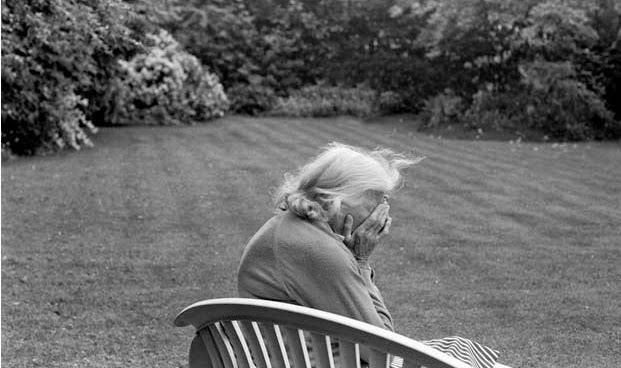
There was a book published last year which really made an impression on me. Mother and Father by Paddy Summerfield is a poignant documentation of the photographer's elderly parents and their last decade of life together. Mostly shot through the window of their home, the black and white photographs show the couple either working or relaxing in their garden, together yet separate in that companionable way people have after a lifetime spent together, the mother often lost in her own private world, the father tenderly attentive. These are quiet, unspectacular photographs made with love and concern, so distant from the frantic posturing and self regard of much of the contemporary photography world. According to critic Sean O'Hagan they are "a reminder of the power of a certain kind of photographic attentiveness that has become increasingly hard to find in an age of manipulated image-making." You can read his review here.


  All photographs above by Paddy Summerfield

Intensely personal yet with universal appeal at the same time, they set me thinking about my own parents. My mother died last year, yet I have few photographs of her in her final years as she steadfastly refused to have her picture taken. I suspect this is quite a common occurrence and that in comparison to the large numbers of photographs taken of a person in the span of their lifetime, their old age probably remains sparsely documented. Perhaps the odd snap taken with family at Christmas or other celebrations, but the day to day minutiae of their lives are not often deemed worthy or interesting subjects. 

It is too late now for me to portray my parent's life together - the final reminder I have of my mother is a photograph of her sitting in the sun in the hospital garden, taken a couple of weeks before she died when she was too ill to notice or mind that I had taken a picture......


Sunday, 22 February 2015

Extract the magic

A couple of months ago I bought a book called The Photographer's Playbook - a collection of 307 assignments and ideas from photography practitioners - artists, teachers, curators, commercial photographers - ranging from the practical and the inspirational right through to the enigmatic and the plain ridiculous. The overall idea behind the book is to encourage experimentation and play, to overcome the cliché and avoid the overfamilair, to find a fresh approach to photography. The assignments take the form of exercises and lessons, games and challenges, tips and musings. Some are short and pithy, others long and complicated. I glanced briefly through the book and promptly put it aside! 

I picked it up again the other day and started leafing through it (you can either work through each contribution in order or more fun would be to follow the recommended pages at the end of each individual page taking you on a journey through related content.) I disregarded some immediately eg. Philip-Lorca di Corcia's suggestion to 'make any kind of work just as long as it involves sex' or a rather impractical assignment involving the purchase of a drone! But I found several that piqued my interest straight away and decided to try out a few over the next few months. At the very least, it should challenge me a little and maybe get me to try something different...... 

         Extract the Magic
         by Elspeth Diederix
"Choose an object that you normally wouldn't give a second glance. Something that you see all the time, but don't find very special.
Study it carefully and discover a quality that you like about it. Maybe its shape or colour, or even the way it moves or feels. 
Think of a way to photograph it that will show the beauty in this commonplace object. Most often, if you just document the object as it is, its particular beauty remains invisible. You might need to alter something to make the viewer see what you see. Take the object out its normal surroundings, or change its colour, or make it look like something else. All it might need is some special lighting. You must provide the extra element that will extract the magic from the ordinary to make it visible."
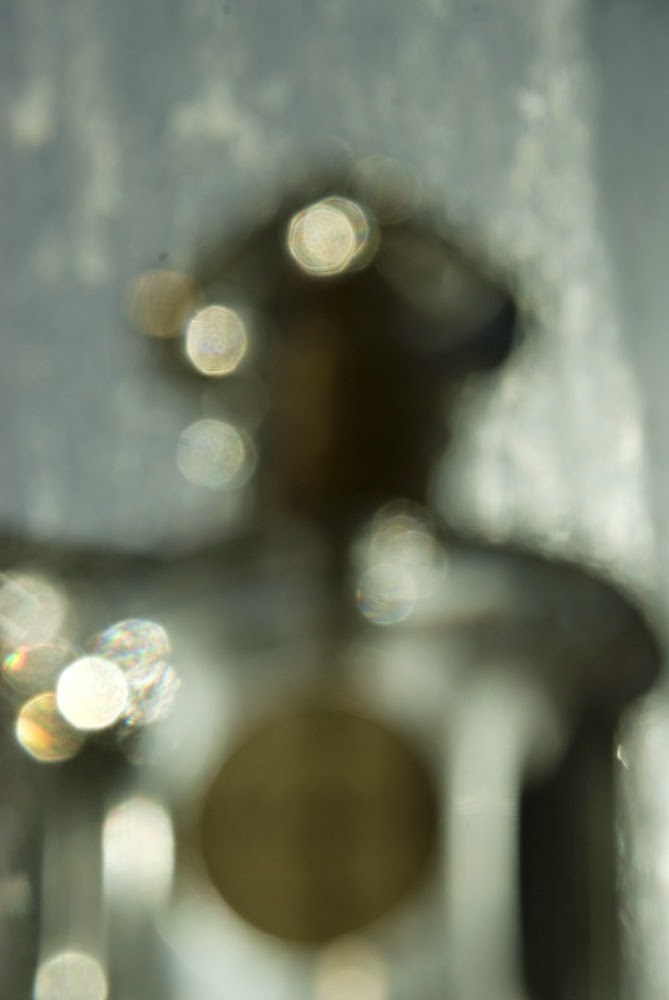
On the chest of drawers my eye chanced on an old empty perfume bottle which I've been meaning to throw away for some time. It has a very distinctive shape which I like. Perhaps it's cheating a little as it's quite an attractive object in itself, but by placing it on the windowsill with the light streaming behind it, I think I've managed to extract a certain magical quality which wasn't apparent before....


Saturday, 31 January 2015

Making Photographs


I'm very pleased to have a double-page spread of my work featured in a new book just published by Bloomsbury, Making Photographs, written by Dr Mike Simmons, programme leader for the MA Photography course at De Montfort University. My thanks to Mike for including my work - it's really heartening when you see your photographs in print, especially in such illustrious company.

The clue to the book's identity is in the title - this is a book about 'making' photographs, about using photography in a structured and organised way to explore ideas in depth, as opposed to the more casual approach of just 'taking' photographs. The emphasis throughout is on developing your own personal perspective and covers such topics as identifying and understanding your subject, generating ideas, cultivating a visual vocabulary, research, inspiration and influence. It is subdivided into chapters which explore the creative process from start to finish, using work of both renowned photographers and former students of the MA course (many of whom have since become very successful in their individual fields) to illustrate ideas and working methods. The reader is encouraged to think critically about the way images are read and understood and there are both case studies and practical exercises in each chapter to aid the process. The book would be a first-class introduction to the understanding of the creative process, both for students of photography and photographers in general who wish to develop a more coherent and personal approach to their work.


    My work as featured in the book

Reading through it, I was immediately transported back to my time on the MA course at DMU, where, under the tutelage of previous course leader and founder Paul Hill, together with Mike Simmons and Greg Lucas, we were constantly encouraged to experiment, research, question and justify as we made our way on our photographic journey. I learned such a lot, and studying on the course helped shape my interests and develop my own style. But I wonder how many photographers carry on working in this way once they have graduated? It takes a tremendous amount of self-discipline to do so much preparatory and developmental work when you are not in a learning environment and without the support of a peer group. I realise how far I have drifted away from this ordered approach - I do take the odd note and still do a lot of research into other photographers, but the days of keeping a photographic journal are long gone and my method of working is much more intuitive. I would find it really difficult to plan my projects in such close detail now. These days, I often start with a vague idea and see where it takes me and I have noticed a worrying tendency to fly off in too many directions at once, or else I get bogged down and abandon the idea!

Perhaps now would be a good time to return to a more disciplined and considered approach to making photographs....

Tuesday, 27 January 2015

A few feet away

Last week, browsing in one of my favourite London bookshops - Koenig Books on Charing X Road - I came across a rather beautiful volume of photographs by Paul Strand, the renowned photographer whose work I'm ashamed to say I'm not very familiar with. The book is called The Garden at Orgeval and consists of black and white images of his garden in France, taken in the last years of his life - nothing spectacular at first glance, but beautifully composed quiet studies of plant forms and shapes.

From The Garden at Orgeval by Paul Strand

What led me to examine the book more closely was Strand's quotation on the opening page:
"The artist's world is limitless.
It can be found anywhere, far from where he lives or a few feet away.
It is always on his doorstep."
It is something which immediately struck home - how we are often blind to what exists under our noses, preferring the exotic, unusual or unfamiliar. It's certainly easier to make interesting work far from home - just being in a new or unknown location sharpens the photographer's eye. But surely it can be just as rewarding to observe and document our immediate surroundings, the stuff of everyday life in all its familiarity.

In The Gravity of Time, the introductory essay to the book, photographer Joel Meyerowitz explains how when he first came across this book as a young man, he thought the photographs were a bit dull and simple compared to Strand's iconic earlier work, and that Strand had 'probably lost his nerve and succumbed to some sort of visual ennui'. Only when he was approaching the same age as Strand was then, did Meyerowitz 'get it', understanding that a deep visual communion with the natural world was probably something you only appreciate with age. Artists throughout the centuries have tended to pare down their work in their later years and Meyerowitz proposes that perhaps it is a 'winding down of ambition and the measuring of the time that is left that draws them to this simplicity, within which lie the subtle complexities of nature often hidden from the eyes of the young.' You can listen to him reading the essay here

This is a tendency I've noticed in my own practice though I don't claim to have any deep communion with nature. As I get older my priorities seem to be changing. Instead of heading out to the street with my camera, I find my attention turned towards making still life photographs at home, using the objects I find to hand to create compositions which resonate with a personal meaning. However, I do wonder whether the reason for this is sheer laziness rather than any deepening of insight - it takes effort to go out and photograph in the city! I also struggle a bit with the kind of work featured in this book.  Close-up studies of nature - the kind of thing beloved by macro enthusiasts - don't particularly inspire me.

So this morning, I thought I would go out into the garden and see if anything caught my eye on my own doorstep. At this time of year, there is not much to see - a lot of brown branches and bare earth, the tangled remains of last year's growth. Yet there are still a few little traces of colour and some welcome signs of spring's imminent arrival. This is an exercise I have tried in the past - trying to draw inspiration from unpromising material - and is probably something I should do more often. Looking closely brings its own rewards.


Tuesday, 8 January 2013

Elmet

Continuing my occasional series on photography books on my bookshelf, I have been looking this week at Elmet, a book of poems by Ted Hughes with photographs by Fay Godwin. Elmet is the name for the last independent Celtic kingdom in England which originally covered most of Yorkshire but which at the time when Hughes was writing these poems in the 1970s and 80s, he used to describe that area of inhospitable Pennine moorland where he grew up in the upper Calder valley around Halifax and Heptonstall, stretching over the Lancashire border a little way. The book, originally published as The Remains of Elmet in 1979, and later extended to the present edition, was a mutually reciprocal collaboration between the poet and the photographer. Hughes began by writing the poetry in response to some of Godwin's photographs of the area and the enterprise developed with the poetry triggering further images.

I am not normally a great fan of words accompanying photographs, somehow feeling that the photograph should be able to convey its meaning and impact without the addition of explanatory text.  In this case, however, the two go together hand in hand, Godwin's beautifully evocative black and white images being a perfect illustration for Hughes' spare, uncompromising poems.  The landscape they evoke is bleak and harsh, an expanse of brooding moorland and dark skies, occasionally lit up with piercing shafts of light. This is the landscape of Wuthering Heights and the cradle of the Industrial Revolution, whose dark satanic mills and forbidding Methodist chapels shaped the lives of its inhabitants, leaving their marks on the land. The photographs in the book range from windswept moorland with its isolated farmsteads, sheep and drystone walls to the blackened chimneys, cobbled streets and back-to-backs of the old mill towns, peopled with the occasional stalwart inhabitant. They so perfectly and utterly evoke not only a strong spirit of the place, but also the sense of a long-gone era.    

Stanbury Moor

          Wadsworth Moor

          Where the millstone of sky
          Grinds light and shadow so purple-fine

          And has ground it so long

          Grinding the skin off earth
          Earth bleeds her raw true darkness

          A land naked now as a wound
          That the sun swabs and dabs

          Where the miles of agony are numbness
          And harebell and heather a euphoria.                                                                                                                                                                                                                                                         

Crow Hill above Mytholmroyd

Alcomden

Colne

Mytholmroyd

Hebden Bridge

Path and Reservoir above Lumbutts

Alcomden

Bridestones Moor

Blake Dean

          Emily Brontë

          The wind on Crow Hill was her darling.
          His fierce, high tale in her ear was her secret.
          But his kiss was fatal.

          Through her dark Paradise ran 
          The stream she loved too well
          That bit her breast.

          The shaggy sodden king of that kingdom 
          Followed through the wall
          And lay on her love-sick bed.

          The curlew trod in her womb.

          Her death is a baby-cry on the moor

          The stone swelled under her heart.


Top Withens

          From Two Photographs of Top Withens

                              ....But the tree -
          that's still there, unchanged beside its partner, 
          Where my camera held (for that moment) a ghost.

Fay Godwin's photography included both portraiture and documentary but it is for her work on the British landscape that she is most recognised - the Land trilogy - Land (1985), Our Forbidden Land (1990) and The Edge of the Land (1995).  In the foreword to Landmarks, a retrospective of her best-known work, Yorkshire poet and playwright Simon Armitage points out that her photographs illustrate 'a human desire for order and regularity, its endless urge to impose structure and pattern on a planet whose ultimate beauty is its unpredictability, its randomness, and its wild freedom.'  As such they are not merely documentary or landscape photographs but have a 'psychological and philosophical subtext' dealing as they do with environmental and political concerns.  In his excellent introductory essay to the same book, photography historian Roger Taylor describes her as a 'topographer with attitude' - someone who goes out into the the landscape to report back on what they had personally encountered. 

She was a dedicated and dogged photographer who realised the importance of the 'revealing' properties of light, often returning to the same spot many times until she got the photograph she wanted. An expert printer, her photographs display a 'mastery of the elusive grammar of greys' and are usually printed out at the (by today's standard) small size of 16"x12", and never bigger than 24"x20".  I was lucky enough to see an exhibition of her work a few years ago at the National Media Museum in Bradford and can testify to the exquisite beauty of her prints. Fay Godwin's work is restrained and modest, not blowing its own trumpet in any way. It is authentic and principled without being sanctimonious or politically correct - the type of work which nowadays too often gets ignored or overlooked.  

You can read the last interview before her death in 2005 here.  Also a good article by author Margaret Drabble about her exhibition Land Revisted at the National Media Museum in 2011

All photographs by Fay Godwin
Poems by Ted Hughes

Tuesday, 6 November 2012

Open Skies

Don McCullin is not normally a name associated with landscape photography, being more well-known for his war photography and urban images. Yet his book Open Skies which I have been dipping into this week, is full of the most wonderful, impelling black and white landscapes. The photographs, shot on film and printed dark as dark can be, are mainly of the Somerset Levels where McCullin settled after many years photographing the worst atrocities and harrowing scenes in war zones all over the world. This is not the standard picturesque vision of the English landscape, with summer sunshine and fluffy clouds. They show a windswept, stark expanse of countryside in winter, under dark and louring skies, and must surely be an expression of an anguished soul trying to come to terms with what he has been through. In the preface, McCullin states
"After photographing wars and revolutions for two decades, the memories of those painful years nearly always try to spoil my days, even now, here in England....My solace lies in recording what remains of the beautiful landscape of Somerset and its metallic dark skies, which give this county an aged and sometimes remote feeling as if the past is struggling against the future. The stillness of silence and sometimes my loneliness provoke my imagination, but, like the surrounding land, I am fighting to release the past in me."
I often struggle with the idea of a landscape expressing the photographer's emotions but in this case, there is no doubt that they do.  McCullin is a modest man not given to discussing the 'meaning' of his pictures - in the introduction to the book, novelist John Fowles compares his reticence with the "many photographers these days who, not satisfied with simply printing their work, have to develop it in a totally unnecessary linguistic darkroom and puff it in fashionable art-gallery jargon.  That murky slough of turgid self-justification.... Don expects his images to be their own commentary, like all decent artists." This was written in 1989 - imagine what he would have to say these days with the plethora of mind-numbing 'artist statements' which 'challenge, explore and interrogate' ad infinitum! This is work which stands on its own without the need for words. Inspiration indeed.


All photographs Don McCullin from Open Skies.

Wednesday, 31 October 2012

Photographs not taken

I very rarely go out without a camera of some sort but this morning I decided to go out for a walk and deliberately leave my camera at home. You don't always need to have your camera with you - in fact there are times when I think I pay more attention without it, as the camera can get in the way of looking and make you not fully aware of being in the moment.  Conversely, there are days when this is patently untrue and having your camera with you seems to heighten your observational powers.  But this morning, I stepped out unencumbered and despite initially regretting my impulse, I eventually stopped wishing I had it with me and concentrated on what my eyes could actually see.

At every turn a new vista opened up before me and I found myself not only looking but listening more carefully.  Some of the photographs I didn't take, which you will just have to imagine:
  • A dark and mysterious pond surrounded by huge, creaking, twisted willows
  • An owl flying low between the trees
  • A tumbledown brick farm building, its roof gaping and brick walls collapsing 
  • A drake with a harem of a dozen ducks peacefully swimming on the water of another pond, ringed by reeds and bulrushes.  As they saw me, they rose up in unison and flew directly towards me and over my head
  • The leaves from the row of huge lime trees in the village eddying and swirling along the road in the wind
There is actually a book called The Photographs Not Taken  - a collection of essays by photographers who instead of using the normal method of making a photograph, made one using words instead 'to describe the memories and experiences that didn't go through the camera lens.....mental negatives which depict the unedited world and the moments of life that do not exist in a single frame.'
I'm not suggesting that as photographers we make a habit of abandoning our cameras but it doesn't do any harm to leave them at home once in a while (and I'm sure the world wouldn't miss a few less images!).  Of course, you risk missing the unrepeatable shot, but there's always tomorrow.....