Showing posts with label exhibition. Show all posts

Tuesday, 24 March 2015

Human Rights Human Wrongs


Birmingham, Alabama on 3 May 1963. Photograph: Charles Moore

Human Rights Human Wrongs currently showing at the Photographers’ Gallery is a hard-hitting, and ultimately very sobering look at the story of human rights in the second half of the twentieth century – a catalogue of wars, demonstrations, uprisings, famine, political struggle and violence. Taking the 1948 Universal Declaration of Human Rights as a starting point, and in particular Article 6 which states ‘Everybody has the right to recognition everywhere as a person before the law’, it is curated by Mark Sealy, director of Autograph ABP, using photographs from the archive of the Black Star agency, an organisation founded in 1935 by three German Jews who fled Nazi persecution. Key events from the American Civil Rights movement are depicted alongside African independence struggles, the Vietnam War, uprisings in Central America, the invasion of Czechoslovakia, student riots worldwide, the Biafran famine, together with a number of portraits of Nobel Peace Prize winners.

Most of the photographers are not household names, but the images they portray are familiar from newsreels and newspapers of the time, and there are a few famous photographs - a gun-toting Patty Hearst, a Biafran child with outstretched hand, civil rights campaigners such as Martin Luther King. The photographs themselves are all black and white, working press prints complete with marks and creases.  The curator has opted not to display the work in strict chronological or geographical order but instead juxtaposes images from struggles in different parts of the world - a picture of the Chicago riots sits next to one of a conflict in Mozambique, student demonstrations in Paris are shown alongside similar protests in Mexico and Berkeley, California. The effect serves to emphasise the common experiences and shared grievances worldwide.  Dotted throughout the exhibition are a number of small series – police dogs being set on the Birmingham marchers, a Vietnam War chaplain ministering to American soldiers – showing the viewer that the decisive moment and the iconic image are only a small part of the whole.

One of the stated aims of the curator is to make people consider the role of the photojournalist and Western media organisations and the fact that most of these events are mediated through the eyes of an outsider within ‘a very particular tradition of Eurocentric concerns’. Does the representation of repeated images of conflict and suffering dehumanise or objectify the people depicted? Does the audience become desensitised over time? What is the cultural meaning assigned to these photographs? These are important questions which the exhibition raises and upon which the viewer is encouraged to reflect.  The densely packed exhibition on two floors is full of shocking, graphic images of suffering and grief, racism and oppression, the casualties and aftermath of war, social unrest and instances of brutality and at times is rather an overwhelming experience.  But the fact that events such as those depicted in the photographs are still happening all over the world is a compelling reason to visit this important exhibition.


Czechoslovakia Invasion, Prague, on 21 August 1968. Photograph: Hilmar Pabel

  Martin Luther King in Birmingham, Alabama, December 1965. Photograph: Bob Fitch

 The Republic of Biafra, c 1968. Photograph: Carlo Bavagnoli

Young man steals the sword of King Baudouin I, during procession with newly appointed President Kasavubu, Leopoldville, Republic of the Congo (now Democratic Republic of the Congo), 30 June 1960. Photograph: Robert Lebeck

All Photographs from The Black Star Collection/Ryerson Image 

Human Rights Human Wrongs at The Photographers’ Gallery, 16-18 Ramillies St, London W1F 7LW Until 6 April 2015 Free

This review is published in the Spring edition of fLIP, the magazine of London Independent Photography

Monday, 12 January 2015

Catching Up


It's been over 18 months since I posted anything on this blog. Much as I recoil from the general idea of a New Year being a new start, this year I feel differently somehow and am beginning to feel the stirrings of desire to get photographing again. The reasons for my recent disengagement with photography have been various. I've had other things on my mind - the deaths of both my best friend and my mother, together with my attempt and failure to sell up, move house and make a fresh start elsewhere, have all distracted me from pursuing much serious photography recently. Also the sheer volume of images we get exposed to - on the web, via social media, in exhibitions, books and magazines - has contributed to a kind of disenchantment and fatigue. But time to pull myself together - I will just have to make an effort to filter out the dross, concentrate on what really interests me and stay focused!

It hasn't been a total waste of a year though - I have managed to create one book which I'm happy with - An Accumulation of Days - a collection of photographs taken in and around the home over the course of a few years. The images range from almost abstract shadows and reflections to more intimate portrayals of small everyday moments as the seasons change and the days pass. A preview of the book can be seen here

Some of the work from this book also featured in an exhibition I took part in last November at Espacio Gallery in London's Shoreditch as part of Photomonth. The show The Bleached Bones of a Story was organised by London Independent Photography Central Group and featured work from 11 photographers detailing life's little events and ordinary things. It was a thoughtfully-curated show where disparate work seemed to connect very well. A great success.

Earlier in the year The Swanscombe Project was shown at Goldsmith's, University of London. This was the culmination of a year's work by sixteen photographers documenting life on the marsh. My work for the project can be seen in earlier posts on this blog. As plans to develop the marsh gain momentum, the project will get another outing in February this year at the Blake Gallery in Gravesend. Details to follow.

Over the past year I have also been helping out on the editorial team of fLIP - the thrice-yearly photography magazine produced by London Independent Photography. The magazine, free to members and on sale at selected bookshops and galleries, is an interesting mix of members' work and features, interviews, exhibition listings and reviews and is completely free of advertising. Each issue is centred around a theme - currently Conflict. Excellent value for money and a good read!

Finally I have spent some time revamping and updating my website. I think the result is a more professional, streamlined look with my work divided into relevant themes which are easily searchable. A well-designed website should be a showcase for your work. Despite the importance of social media and blogging, it's usually the first port of call when promoting yourself so it's important to get it right and make it stand out from all the millions of others out there! You can see the result here.

So - expect more photographs, ideas for project development, updates, some of my favourite book recommendations, exhibition news and anything else that takes my fancy.


Saturday, 26 January 2013

Disappointments.....

So often we look forward to an event, exhibition, or eagerly awaited new film or publication only to be let down by the reality. Conversely, some things we have little or no expectations of, either because we are unfamiliar with the artist in question or because we may even actively dislike their work. In these cases, we can be pleasantly surprised and even inspired.

A couple of weeks ago I spent a few days in London, rushing around trying to catch all the exhibitions I had been meaning to see before they close at the end of the month. Despite the best of intentions, it is usually the case that things are left to the last minute, as happens with most things in my life! I had been looking forward to Seduced by Art: Photography Past and Present at the National Gallery as it deals with the two genres of art I am most interested in - photography and painting - specifically the influence of the latter on the former and the elastic and fluid nature of the relationship between the two. I'm not saying it was a bad exhibition - just that I came out feeling rather underwhelmed. Perhaps some of it is down to the exhibition space in the basement of the Sainsbury wing - a cramped and rather claustrophobic place, the walls painted in dark colours with no natural light. It works for some exhibitions but I felt the walls crowding in on me as I jostled to see the work on display.

This was the National Gallery's first major exhibition of photography exploring both early photography from the 19th century and the work of contemporary photographers, presented together with historical paintings displayed according to the traditional genres of still life, landscape, portraiture and nudes. The trouble with this approach is that so often it doesn't really demonstrate a dialogue between the two at all - it is totally one-sided. The curators have gone out of their way to show that photography takes its inspiration from painting yet failed to demonstrate that it is very much a two-way process. There is no mention of the widespread use of the photographic image in painting nor any of the debate about photography's effect on the history of art. Surely the reality is that photography, just like all other forms of art - literature, music, sculpture, painting - is concerned with the same universal themes of love, life and death which have been the main source of inspiration for all artistic endeavour throughout the centuries.

Many of the photographs involving contemporary restaging of paintings border on the kitsch or in the case of 19th century photographers, display large doses of Victorian sentimentality. The relationship between painting and photography is better illustrated when the photographer, rather than trying to mimic or restage a painting, instead reinvents the subject matter to say something relevant to contemporary life, as in Luc Delahaye's massive US Bombing on Taliban Positions which chillingly represents modern warfare without showing any human presence. It was hung beneath a panorama of a 19th century battlefield complete with soldiers and cannons and the juxtaposition of the two spoke volumes.

The Battle of Jemappes 1821 by Emile-Jean-Horace Vernet


US Bombing on Taliban Positions 2001 by Luc Delahaye

I was particularly taken with a photograph by Finnish photographer Jurma Puranen of Goya's painting of the Duke of Wellington. The photograph shows the surface of the painting transformed by reflections of light, bringing to our attention hidden details, the marks of the brush and craquelure, intensifying the colours and the areas of light and shade, revealing and concealing different elements.  It is a fine example of the transformative power of photography - taking a subject a making something new with it. 

The Duke of Wellington, 1812-14 by Francisco Goya

Shadows and Reflections (After Goya), 2011 by Jorma Puranen

It was a major drawback that many of the paintings on show were a rather undistinguished selection. The opening room featured arguably the most dramatic display of large-scale photographs - Jeff Wall's The Destroyed Room, Tom Hunter's Death of Coltelli and Sarah Jones' The Drawing Studio - all inspired by Delacroix' magnificent painting The Death of Sardanapalus. Instead of the original, all we got to see was a small lacklustre copy of the great painting by a little-known artist - hardly guaranteed to inspire anyone! All in all, a show of mixed parts and missed opportunities, yet for all that, it is always good to see photography exhibitions of this size and scope. I can't help wondering though what purpose is served by this endless comparing and contrasting of the two artistic genres. Photography is well able to stand on its own two feet without any outside help!

 The Death of Sardanapalus 1827 by Eugene Delacroix

 The Death of Coltelli 2009 by Tom Hunter

 The Drawing Studio 2008 by Sarah Jones

The Destroyed Room, 1978 by Jeff Wall

The National Gallery, 1989 by Thomas Struth

 The Rosy Wealth of June, 1886 by Henri Fantin-Latour

Blow Up: Untitled 5, 2007 by Ori Gersht

 Signs of the Times, England, 1991 by Martin Parr

 Mr and Mrs Andrews, 1750 by Thomas Gainsborough

I deliberately avoided reading any reviews of the show before I went, so was surprised to see afterwards how varied they were, ranging from delight to ambivalence to outright vitriol (no prizes for guessing which critic this is!) For those of you who have seen the exhibition, you will no doubt have made up your own minds. For those of you who haven't, you'll just have to take my word for it!


Monday, 31 December 2012

Six of the best....exhibitions

As the countdown to the end of the year begins, here is quick round-up of some of the best photography and art exhibitions I have seen in 2012. This isn't in any way a comprehensive list - just an eclectic and extremely subjective choice of those exhibitions, big or small, that have made an impact on me in some way. In no particular order....

William Klein + Daido Moriyama, Tate Modern
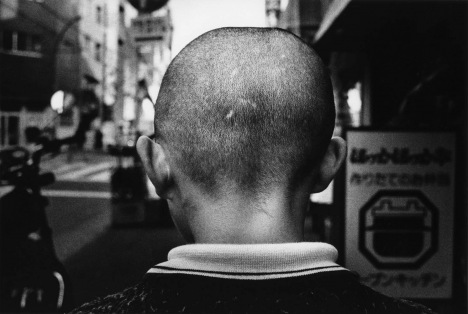
A huge blockbuster of an exhibition but required viewing for anyone interested in gritty urban photography and the relationship between these two giants of 20th century photography. As well as displaying hundreds of photographs from the 50s to the present day, the exhibition also charts the development of the photobook in their work and showcases Klein's experimental films and Moriyama's work in avant-garde magazine Provoke. Anyone of the opinion that black and white photography has had its day, will have their illusions shattered! You can still catch the exhibition until 20th January. Details here

New York,1954-55, William Klein

Memory of a Dog, 1982, Daido Moryama

Luigi Ghirri - Project Prints, Mummery + Schnelle
A jewel of an exhibition. Ghirri's deceptively simple images are in fact the expression of a complex interrogation of the relationship between photography and reality - 'hieroglyphs to be deciphered and interpreted' and his approach to photography is underpinned by a rigorous intellect. From the 1980s until his premature death in 1992, Ghirri turned his attention to the Italian landscape, which forms the major part of the Project Prints - medium format contact prints which he used as a tool for working on and shaping his images into a variety of changing and overlapping series. It is hard for me to put my finger on why I like his work so much but Ghirri is one of my favourite photographers, until recently little known in this country. It was a delight to be able to pore over the tiny prints, arrayed in groups around the walls of this small gallery. A book of the Project Prints is also available. More info here


From Project Prints, Luigi Ghirri

David Claerbout - The Time That Remains, Parasol Unit
Combining film and photography, Claerbout's themes revolve around the passage of time and the act of looking. His work requires the viewer to slow down, look closely and question what they are seeing. The film The Algiers Section of a Happy Moment was for me the highlight of the show - a sequence of extraordinarily beautiful stills of a football game taking place on a rooftop pitch in the Algiers Casbah. The game is paused as the men and boys feed some seagulls. It is only after looking at the video for some time that you eventually realise that the images are all of the exact same moment, but taken from many different angles of view, some high up, some at ground level, multiplying the photograph's capacity to portray a stilled moment in time a hundredfold. One of the most beautiful pieces of filmed work I have ever seen. More info on the Parasol Unit's website.


The Algiers Section of a Happy Moment, 2008, David Claerbout

Cy Twombly - A Survey of Photographs, Gagosian Gallery
Part of the Last Paintings exhibition. I had no idea that Twombly was a photographer as well and the images were a revelation. Taken from the 1950s onwards, the photographs resonate with a sense of memory, the passage of time and history - recurring motifs range from Classical sculpture, his own work, interiors, studios, landscapes, still life, often featuring fragments and close-ups of objects and flowers. The images all share a certain faded aesthetic using natural light and reminiscent at times of earlier Pictorialist photography. Twombly developed his own technique for printing - the photographs are in fact Polaroids which he enlarged and then had printed on a photocopier to give them their particular out of focus, grainy, textured quality. He called them 'dryprints' and they are quite exceptionally beautiful. I feel lucky to have seen them in the last half hour of the show before it closed for good! You can read more about the exhibition and photographs here and here

Peonies, Bassano in Teverina, 1980, Cy Twombly

Interior, Rome, 1985, Cy Twombly

Lucian Freud - Portraits, National Portrait Gallery
My last two exhibitions are not photographic in any way but both relate to the idea of the gaze. There is not much I can say to add to the wealth of material written about Freud's work. Freud ploughed his own furrow during his painting career, having little regard for the art world's trends and concepts. The paintings are the result of close and unrelenting scrutiny of his subjects, often recording a relationship, and are intense and psychologically charged. To be able to see such a great collection of works spanning his entire career, including the unfinished painting he was working on at the time of his death, was a profoundly moving experience.

Girl with Beret, 1951-2, Lucian Freud

 The Painter's Mother Reading, 1975, Lucian Freud

Girl Sitting in the Attic Doorway, 1995, Lucian Freud

Metamorphosis: Titian 2012, National Gallery
Bringing together for the first time since the 18th century Titian's three great paintings on the myth of Diana and Actaeon taken from Ovid's collection of stories Metamorphoses, this multi-layered exhibition in collaboration with the Royal Ballet and artists Chris Ofili, Conrad Shawcross and Mark Wallinger, was both fascinating and illuminating. It is always interesting to see how contemporary artists respond to great art of the past - not in a slavish way of trying to recreate the original paintings, but in a way which expresses their own individual vision, bringing the old stories alive to modern eyes. I found Chris Ofili's reinterpretation of the myth the most alluring and was entranced by the film showing the choreography of the ballet commissioned by the Royal Ballet, but Mark Wallinger's voyeuristic peep show drew most of the crowds! Truly inventive. There is a good review of the show here

 Diana and Actaeon, 1556-1559, Titian

Ovid-Stag, 2012, Chris Ofili

Diana, 2012, Mark Wallinger

Looking forward to seeing what 2013 brings!


Thursday, 6 December 2012

A question of colour

Cartier-Bresson: A Question of Colour is a gem of an exhibition currently running at Somerset House in London. The starting point is a number of black and white photographs by Henri Cartier Bresson not previously seen in the UK. These are juxtaposed with colour photographs by 15 different international photographers working from the 1950s up to the present day.  The participating photographers all share a certain working method with Cartier Bresson: their work is spontaneous rather than planned or staged, and mostly shot on the street.

Cartier Bresson is of course known for his black and white work and in fact was quite dismissive of colour photography on technical and aesthetic grounds, claiming that colour was for paintings. The curator, William Ewing has designed the exhibition as both a response and a challenge to these opinions and shows how the use of colour was adopted by many photographers influenced by Cartier Bresson's oeuvre to express a sophisticated and many-layered view of the world. Throughout the rooms in the show, works are grouped around a single black and white Cartier Bresson image, and set up an inspiring interplay of themes and motifs, places and people, light and colour.

Some of the photographers are well-known names - Joel Meyerowitz, Helen Levitt, Harry Gruyaert and include some of my absolute favourites - Saul Leiter, Ernst Haas, Boris Savelev.  Some names are new to me - Carolyn Drake, Melanie Einzig, Karl Baden, Robert Walker.  Each has their own distinct ways of using colour, working and responding to life on the street according to their personal vision and preferences. What unites them is the stream of joyful colour which threads it way through the exhibition, whether subtle and restrained, rich and jewel-like, naturalistic or highly saturated, eliciting a myriad of responses in the viewer.

The colour image is so ubiquitous nowadays that it is difficult for us to imagine what it was like in the 1950s when serious photography was always in black and white - colour photography was in its infancy and viewed as the domain of the amateur or commercial photographer. Cartier Bresson considered colour photography to be inferior to black and white but in fact, as the demand for colour photographs began to grow, he started using it for it some magazine reportage.  There are examples in the exhibition and it has to be said that his colour work is nowhere near as successful as his black and white.  Some photographers have the fortunate ability to switch from one medium to the other, but Cartier Bresson seems to have perfected his black and white eye to such an extent that he was unable to translate his vision into colour.

Highlights for me in the show are Boris Savelev's painterly, muted images reproduced on a large-scale and mounted on gesso-coated aluminium, which give them a depth and presence which is unique; Saul Leiter's luminous studies of life reflected and framed in the windows and doorways of New York; Carolyn Drake's beautiful use of complementary colours to catch fleeting moments.  Some examples below....


 Karl Baden

 Fred Herzog

Alex Webb

 Harry Gruyaert

 Helen Levitt

 Joel Meyerowitz

 Boris Savelev

 Ernst Haas

 Carolyn Drake

Saul Leiter

There is a very interesting review of the show by Financial Times photography critic Francis Hodgson on his blog. He writes about the exhibition in terms of musical harmonies and dissonance, discussing the ways in which colour can affect the mood and response of the viewer - an excellent and thought-provoking read. Also some extra insight into Cartier-Bresson's attitude to colour in this interview with Magnum photographer Harry Gruyaert. This is an exhibition which will definitely demand a further visit - happily it is free so I plan to return. It runs until 27th January.  Details here

Thursday, 29 November 2012

A sea of faces

Last week I made my annual pilgrimage to the Taylor Wessing Portrait Prize at the National Portrait Gallery. I very rarely do portrait work myself but I still find images of the human face endlessly fascinating. It is often said that a good portrait should reveal something of the subject's character but in reality looks can be deceptive and it is a bit simplistic to draw evidence of a person's inner life from their outer appearance. It's more likely that looking at a portrait reinforces our sense of what it means to be human: we may get a feeling of identification and empathy or sometimes the complete opposite - antipathy and alienation, or we may like to attach our own narrative to the picture on show.

I usually approach this show with mixed feelings and inevitably feel let down when my favourites fail to win a prize! Without exception every year I find the reasoning behind some of the judges' choices unfathomable - why some were picked and others ignored - but as always with photography and art in general, preference is entirely subjective. The exhibition attracts a huge number of entries and the selection process is entirely anonymous. The successful entrants range from  professional photographers submitting highly polished work commissioned by newspapers and magazines through to students and amateur photographers.

On display are the usual suspects - wan and miserable young people staring balefully into the camera, a sprinkling of glossy sports stars and celebrities, some of staggeringly huge proportions where every pore and hair is magnified, and a couple of provocative nudes including some children, which given current issues surrounding child welfare I found rather surprising! I felt that some hardly ranked as a portrait at all and seemed more like a figure in the landscape, so small in the frame did the person appear. In amongst this lot however were some gems - a beautiful and quietly dignified portrait of a girl with Down's Syndrome, a Libyan migrant worker caught through a rain-streaked bus window, an African boy framed by the natural light streaming into a dark schoolroom - all really strong and memorable images. Unfortunately none of these images seem to be available on the web but here are some of the prize winners and a few others that caught my eye....

1st prize winner: Margarita Teichroeb by Jordi Ruiz Cirera  

 2nd prize winner: Lynne, Brighton by Jennifer Pattison

 Lola Smoking from the series Off the Set by Alice Pavese Fiori

Michael Stipe by Matthew Lloyd

Kitty, Christine and Kira by Lydia Panas

Gillian Wearing by Robin Friend from the series Sanctuary: Artists and their Studios

Julie Hill by Peer Lindgreen

Hilary Mantel by Michael Birt

The exhibition runs until 17th February 2013 - details here.  All images copyright the artist.